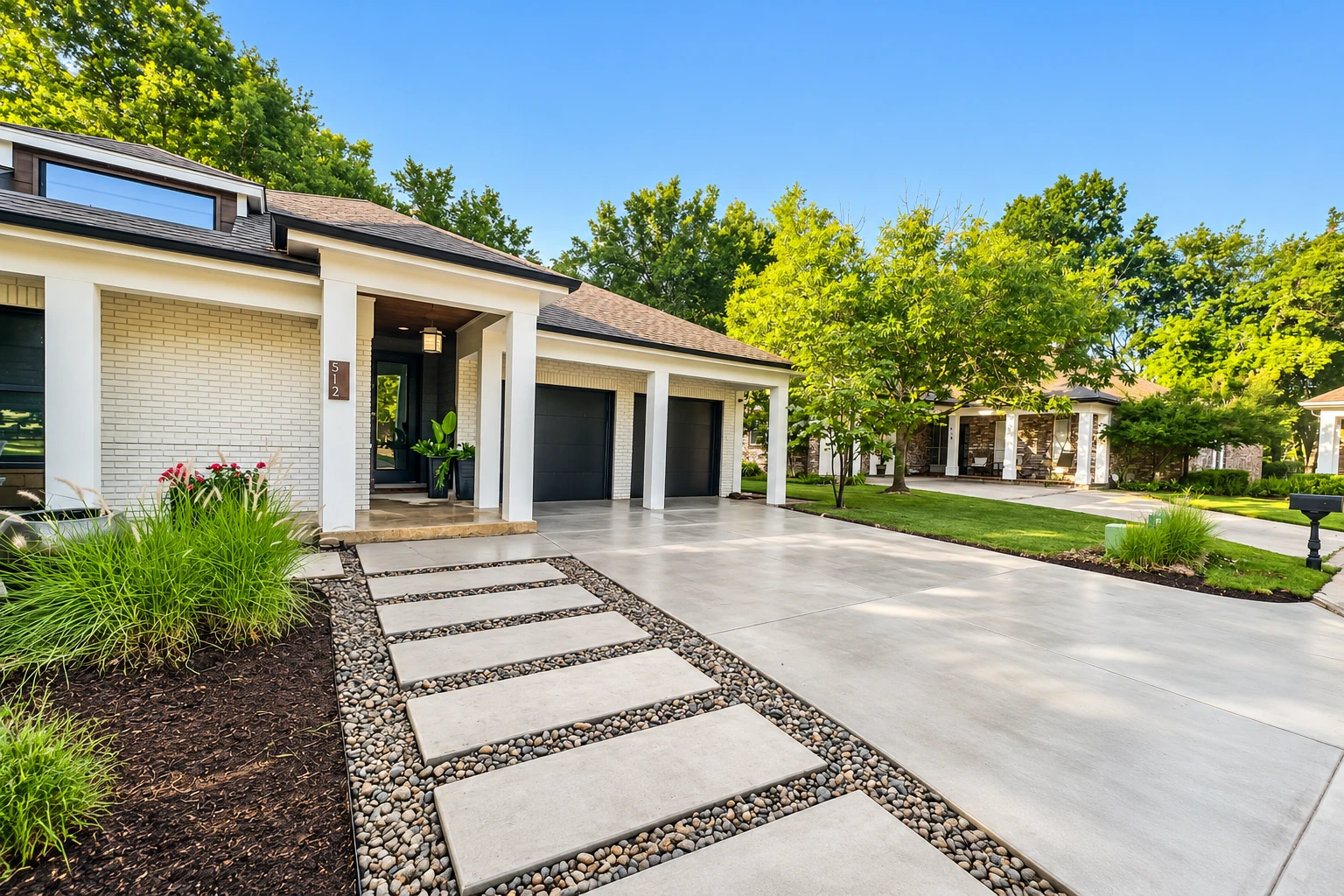
Concrete driveway building
When a driveway has cracked, heaved over roots or started sending water toward the garage, we tear it out, rebuild the base and pour a new one sloped to drain.
Sterling Stone Tiburon Concrete is a concrete contractor based in Tiburon that builds driveways, patios, steps, retaining walls and foundations for homes in Kentfield, starting with the ground underneath and where the water will run.
Sterling Stone Tiburon Concrete builds and replaces driveways, patios, walkways, steps, retaining walls and foundations for Kentfield homeowners. I come out to look at each job myself, and before we talk about finishes I want to know two things, what the ground under your slab is like and where the water runs when it rains.
Most Kentfield calls start with something you can see. It might be a driveway that's cracked and lifting where a tree root got under it, a patio that holds a puddle for days after rain, or front steps that have dropped away from the porch. Those are usually signs of trouble in the ground underneath, so that's where I look first, and it's what the estimate is built around.
A lot of the houses here sit on sloped lots or close to the creek, so we spend more time than you might expect on drainage and on the subgrade, the packed soil and gravel the slab rests on. The work looks a lot like what we do next door in Larkspur and up the road in San Anselmo, and we bring the same crew and the same habits.
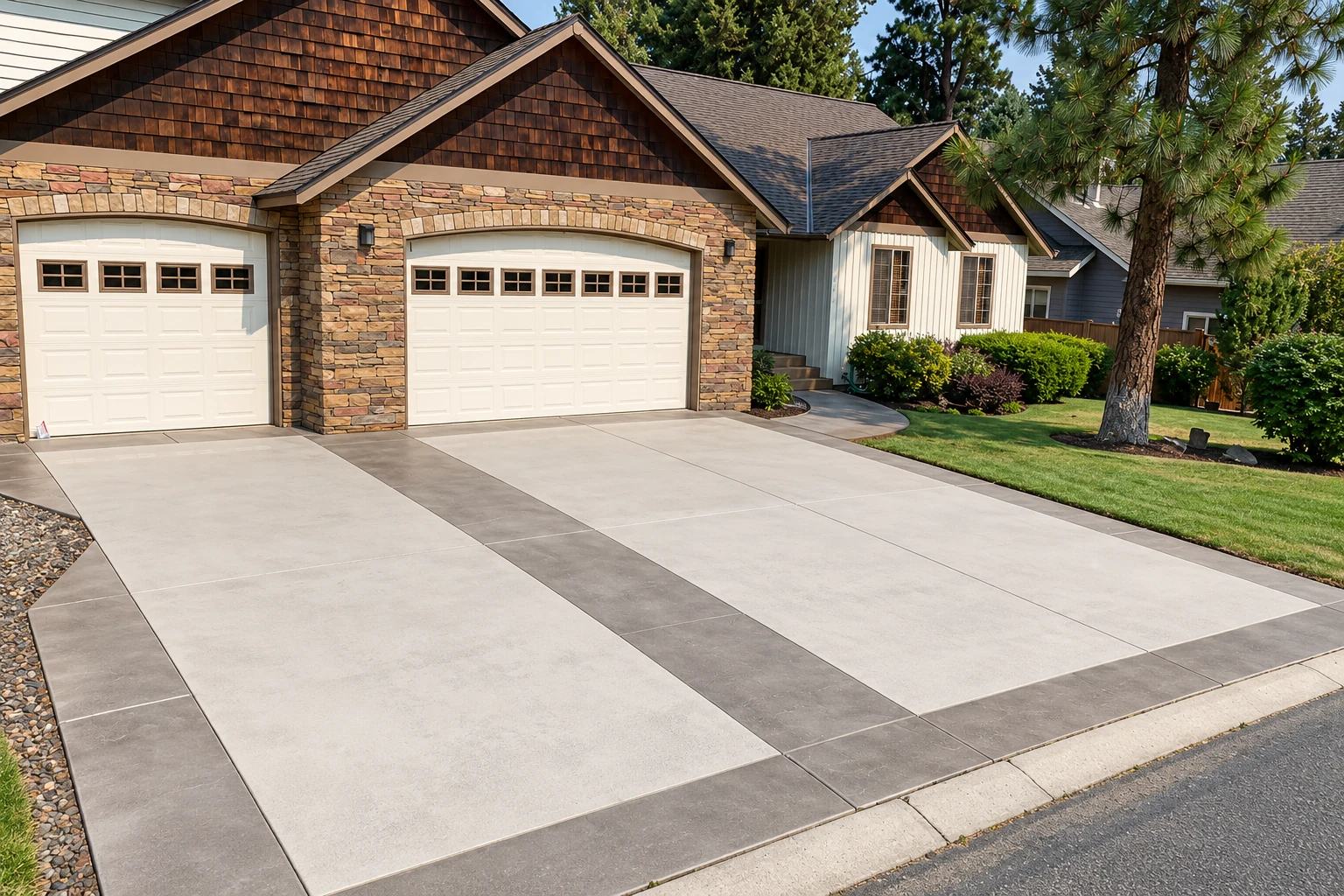
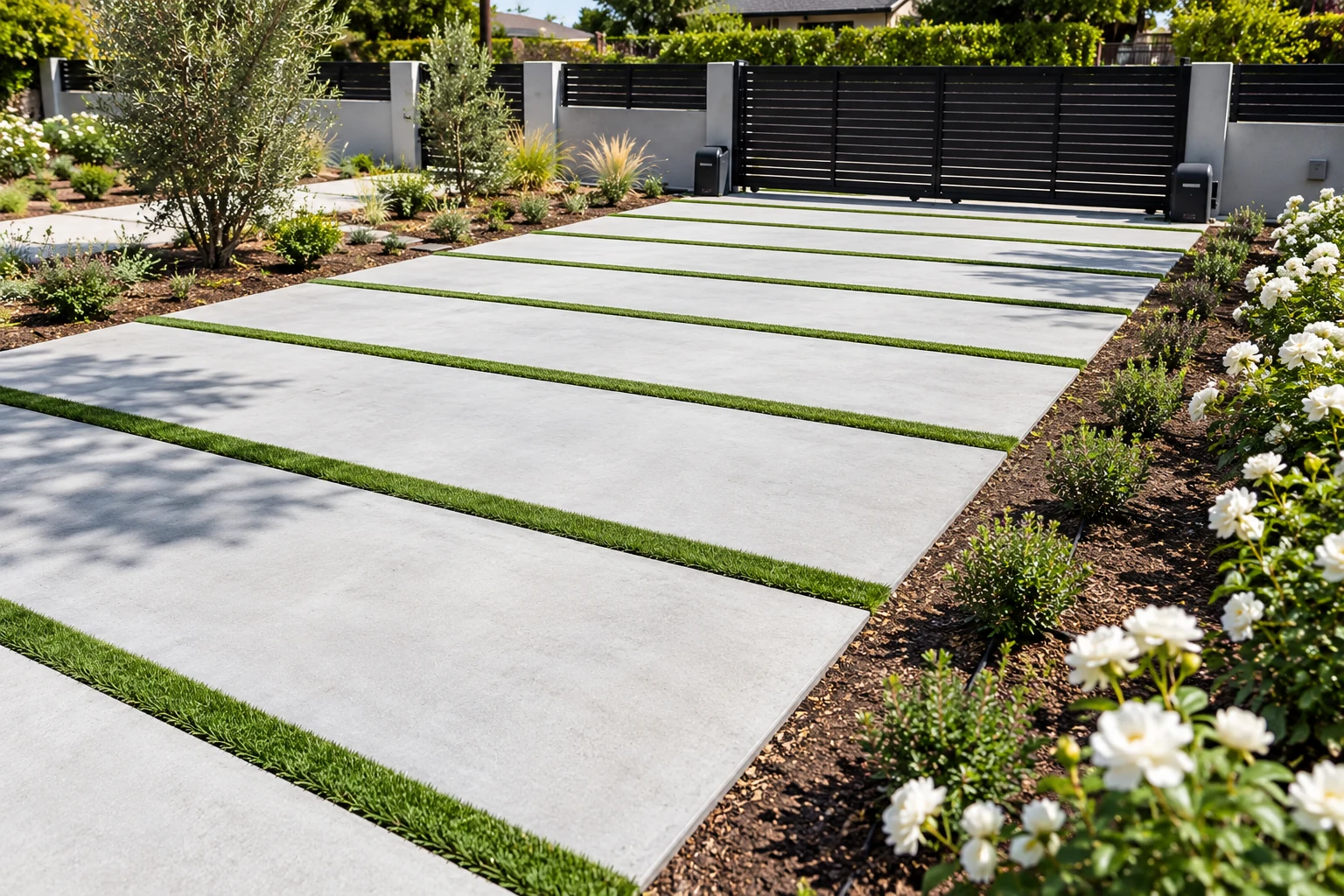
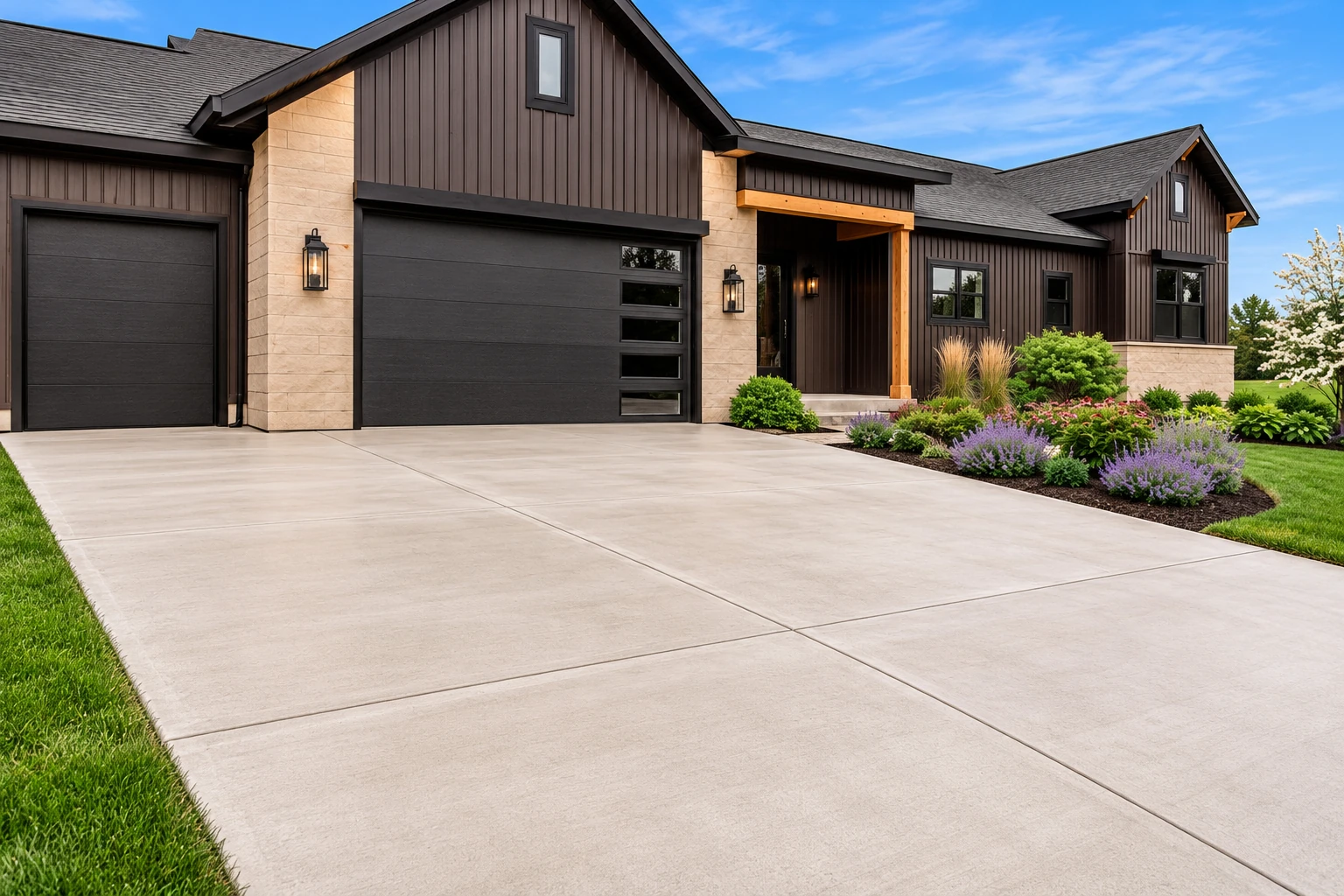
When a driveway has cracked, heaved over roots or started sending water toward the garage, we tear it out, rebuild the base and pour a new one sloped to drain.
For a backyard that's mostly lawn or tired pavers, a concrete patio gives you a flat, dry place for a table, as long as the slab falls away from the house.
Stamped concrete suits a patio or entry where you want the look of stone or brick, poured as one slab so there are no loose pieces for weeds to push up.
If the path to your door has heaved into trip edges, we replace it with a level walk and a broom finish, a light brushed texture that gives shoes some grip.
A garage floor that's pitted, stained or cracked across can be replaced with a new slab on a packed base, with a smooth finish that's easy to sweep.
Color, exposed aggregate and other finishes beyond plain gray help a new driveway or patio sit comfortably next to an older Kentfield house instead of looking out of place.
On a sloped lot, a concrete retaining wall holds back the hillside and gives you usable yard, and we plan the drainage behind it so water doesn't push on it.
For a basement, workshop or addition that needs a concrete floor, we prepare the ground, set the steel and pour a level slab ready for whatever goes on top.
Around a pool, the deck needs a finish that isn't slick when wet and a slope that sends splash water away from the pool and the house.
Front or garden steps that have settled, chipped or pulled away from the house get rebuilt with even rises, so nobody catches a toe on one tall step.
For a new garage, studio or addition on reasonably flat ground, a slab foundation gives the building a solid floor, and the base and steel under it matter most.
When a new structure or a major remodel needs a foundation, we build to the approved plans and work around the inspections before any concrete goes in.
Shared driveways, guest parking pads and small lots for multi-unit properties get the same base work as a home driveway, sized for more cars and more turning.
Decks, fences, sheds and additions need footings, the concrete pads or trenches that carry a post or wall down to firm soil, dug and poured to the plan.
If part of your house has settled and the floors slope or doors stick, we look at what's under it and talk through raising and supporting that section.
We cut openings, trenches and clean edges in existing concrete for drains, utility lines or a patio extension, so you don't have to tear out a whole slab.
Send the form and we'll reply within one business day to set a time for me to come out to your Kentfield property. I'll walk the job, measure and ask how you'll use the space, then you get a written estimate that spells out what's included. There's no pressure and no obligation.
(415) 429-4397The permit office we ask about Kentfield work is Marin County's Community Development Agency, which the county's draft building code ordinance names as the office that enforces it. Simpler county permits are issued on demand, but more complex ones involve inspections and often approved plans, and they can come many weeks or months after you apply. On those jobs the permit, not the pour, usually sets the start date.
I find out what the county asks for on your job and help you with the paperwork, and we wait for any permit to be in hand before we start. Whoever you hire should hold a state contractor license, which the questions below cover, and Marin County requires anyone doing business in its unincorporated area to register for a county business license that renews each year by June 30.
The price moves with the size and thickness of the slab, how much old concrete comes out, how much digging and base the ground needs, how easily a truck can reach the pour and the finish you pick. We work through it the same way from Novato down to Sausalito and over in Richmond, and your written estimate lists each of those for your job.
I started this business in Tiburon in 2020, after teaching myself concrete on small jobs around my own place and then learning the rest next to people who'd done it for years. I still come out to look at each job and write the estimate myself, and I'm on site with our crew while the work gets done, so the person who answered your questions is there when it's poured.
The trade-off I bring up on almost every estimate is base versus finish. The base is buried on day one and it's the first thing people want to trim from a budget, but it decides whether the slab settles or cracks later, so I'd rather spend your money there and keep the finish simpler if something has to give.
We're fully licensed and insured, and our work is backed by our satisfaction guarantee. If you're thinking about a driveway, patio or wall, call (415) 429-4397 or send the form, because I'd rather answer a question twice before we pour than have you wondering about it later.
A few things about Kentfield shape how we plan a slab, a wall or a set of steps here, mostly fire risk, flood risk and the slopes and trees around so many of the houses.
One hazard data site, working from CAL FIRE's maps, puts 51% of Kentfield's land in a High fire hazard zone, less than 1% in Very High and 7% in Moderate. Those shares describe land area, not your lot, so look up your own address on the CAL FIRE map. Concrete steps, walks and walls don't burn, which is one reason people near brush ask us about them.
The same site figures that 7% of Kentfield lies in a FEMA flood area with a 1% chance of flooding in any year, and 14% in the area with a 0.2% yearly chance. You can look up your own lot on FEMA's flood map. Wherever you are, we check where water runs before we set forms, so the slab falls away from the house and doesn't hold puddles.
Marin County has proposed removing the use of fire-retardant-treated wood in High Fire Hazard Severity Zones and wildland-urban interface areas, saying that wood often needs ongoing upkeep the first permit can't regulate. If you're weighing wood against concrete for steps, a wall or edging, that's worth knowing, and I'll ask the county what applies to your job before you decide.
Sloped driveways and big old trees show up on a lot of the jobs we see around here, and both work on a slab from underneath. Roots lift it and water running downhill washes out the base, so we dig out soft soil, pack the base in layers and set rebar, the steel inside that holds the slab together, where it has to carry a car.
The price comes down to your driveway's size and thickness, how much old concrete we haul out, how much base the ground needs, truck access and the finish. Driveways are usually about 4 inches thick for cars and thicker where heavier trucks park, and a slope or soft soil adds digging. I'll walk it and give you a written estimate that lists each of those.
Usually, yes. The state licensing board requires a license when a project needs a building permit, uses employee labor, or has labor and materials totaling $1,000 or more, and contractors need it before they bid. A bigger job can't be split into pieces under $1,000 to get around that. We're fully licensed and insured, so ask any bidder about theirs before you sign.
Usually you can walk on new concrete after a day or two and drive a car on it after about a week. That wait is curing, the time the concrete needs to harden and gain strength, and rushing it is how edges break off early. Heavy trucks should wait longer, and I'll tell you when for your slab.
Concrete can still crack, but a packed base and control joints, shallow cuts that give the slab a planned place to crack, keep it from breaking where nobody chose. Old slabs usually fail because the base was raked level instead of dug out and packed, or the joints were cut late or skipped. We pack the base, cut joints on time and stay out of the midday heat when we pour.
Clear the area, plan to park somewhere else while it cures, and tell me about any sprinkler lines, drains or buried wires you know of. Keep kids, pets and cars off the fresh slab. Most of all, show me where water ends up when it rains, because that shapes the slope and the base more than anything else.
Marin County says it's enforcing the 2022 edition of the California building codes. A proposed county ordinance would bring in the 2025 state update, with some county changes, taking effect January 1, 2026, the same day as the state code. I confirm with the county what applies to your job when we look at the permit.
We're open seven days a week, so call (415) 429-4397 on a weekend morning or send the form while you're standing there looking at the cracks.