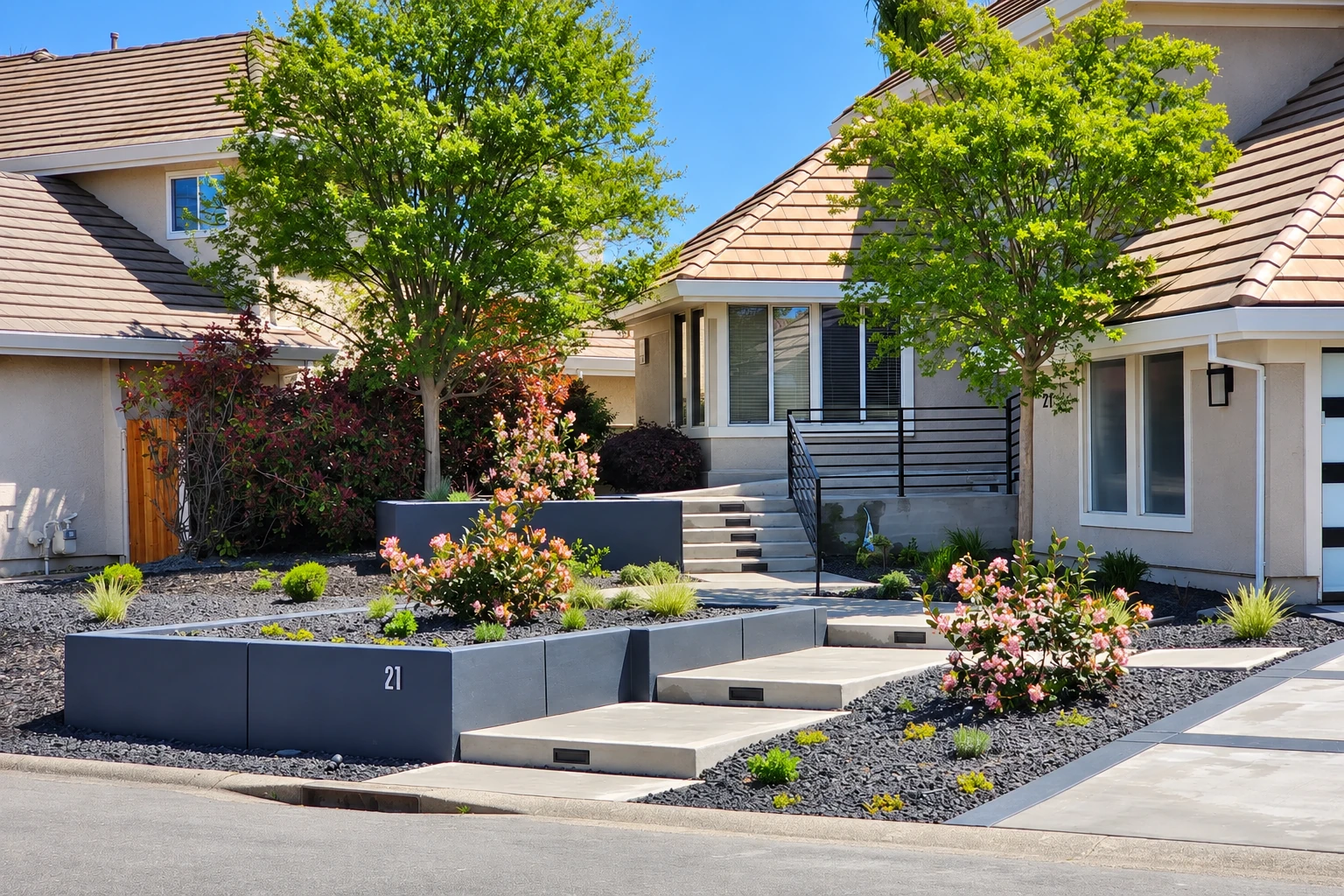
Concrete driveway building
When your driveway has cracked, sunk or holds a puddle by the garage, we break it out, rebuild the base and pour a new slab that sheds water.
Sterling Stone Tiburon Concrete is a concrete contractor based in Tiburon that builds driveways, patios, steps, retaining walls and foundations for Corte Madera homes, starting with the ground under each slab and where the water goes.
Sterling Stone Tiburon Concrete builds and replaces driveways, patios, walkways, steps, retaining walls and foundations for homes in Corte Madera. Most jobs here start with a problem you can see, like a cracked driveway or a patio that puddles, and the fix usually starts with the ground underneath it.
Corte Madera gives us two kinds of ground. Down near the bay the lots are flat and the soil is soft, so slabs tend to sink and water has nowhere quick to go. Up on the hillside streets the questions turn to steps, retaining walls and driveways that drop to the garage, where the slope moves the water for you and the base has to hold its place.
Most calls we get here are about something that has moved, like a sunken walkway, a garage slab cracked across the middle, or a patio that tips toward the house. Before I price a replacement, I want to know why the old one failed, because new concrete poured over the same problem ends up with the same result. We see much the same mix next door in Larkspur.
When your driveway has cracked, sunk or holds a puddle by the garage, we break it out, rebuild the base and pour a new slab that sheds water.
A patio works best when we know how you'll use it, so we size it for your table or grill and slope it away from the house.
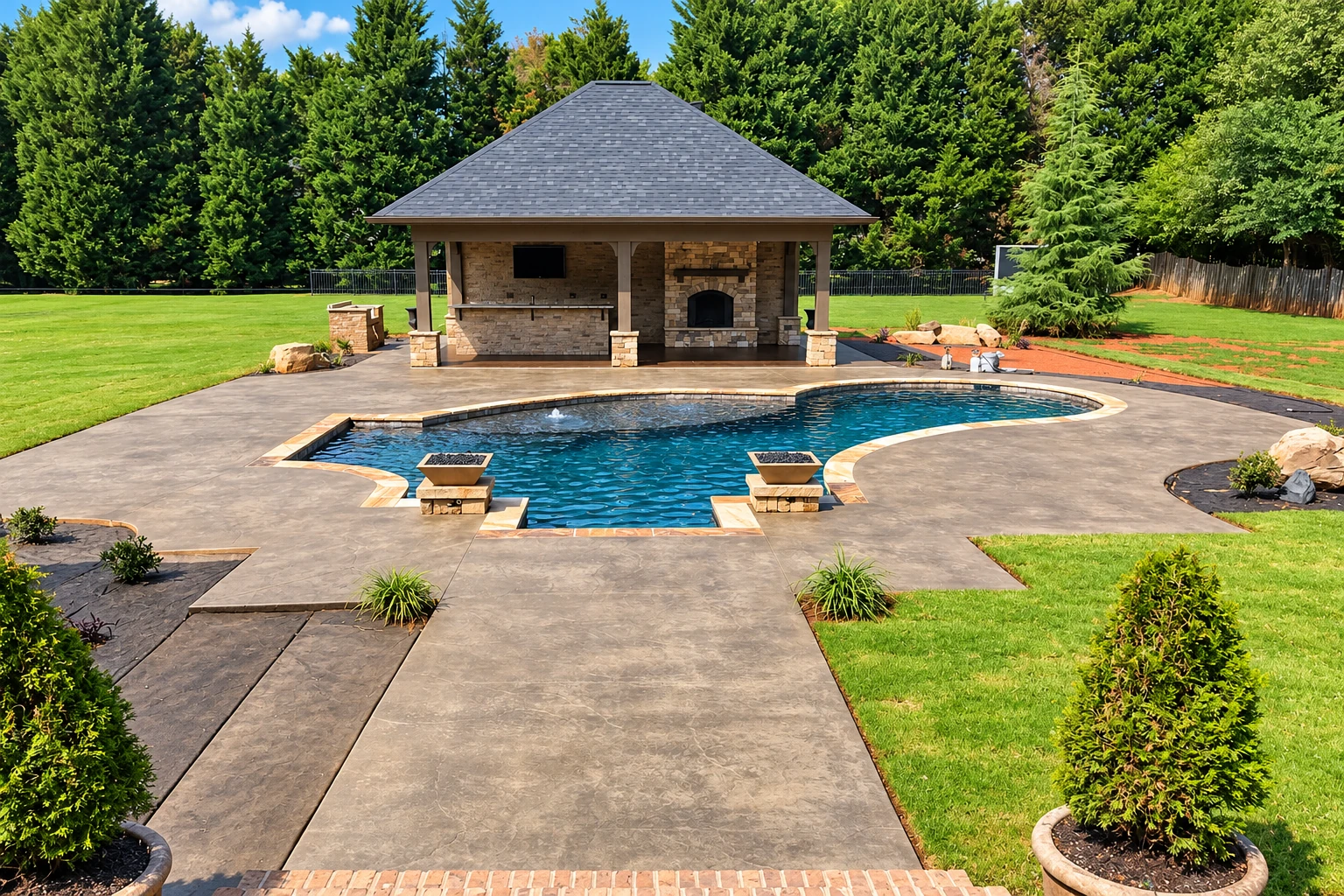
Stamped concrete gives a patio or walkway the look of stone or brick, pressed into the surface while it's wet, on the same packed base as plain concrete.
A walkway that has heaved or tipped turns into a trip hazard, so we replace the bad sections and set the new path to shed water off to the side.
If your garage floor is cracked, stained or holds water in a corner, we pour a new slab that drains out toward the door instead.
Color, exposed stone or a smooth troweled surface can dress up an entry or a patio, and we'll show you samples before you choose anything.
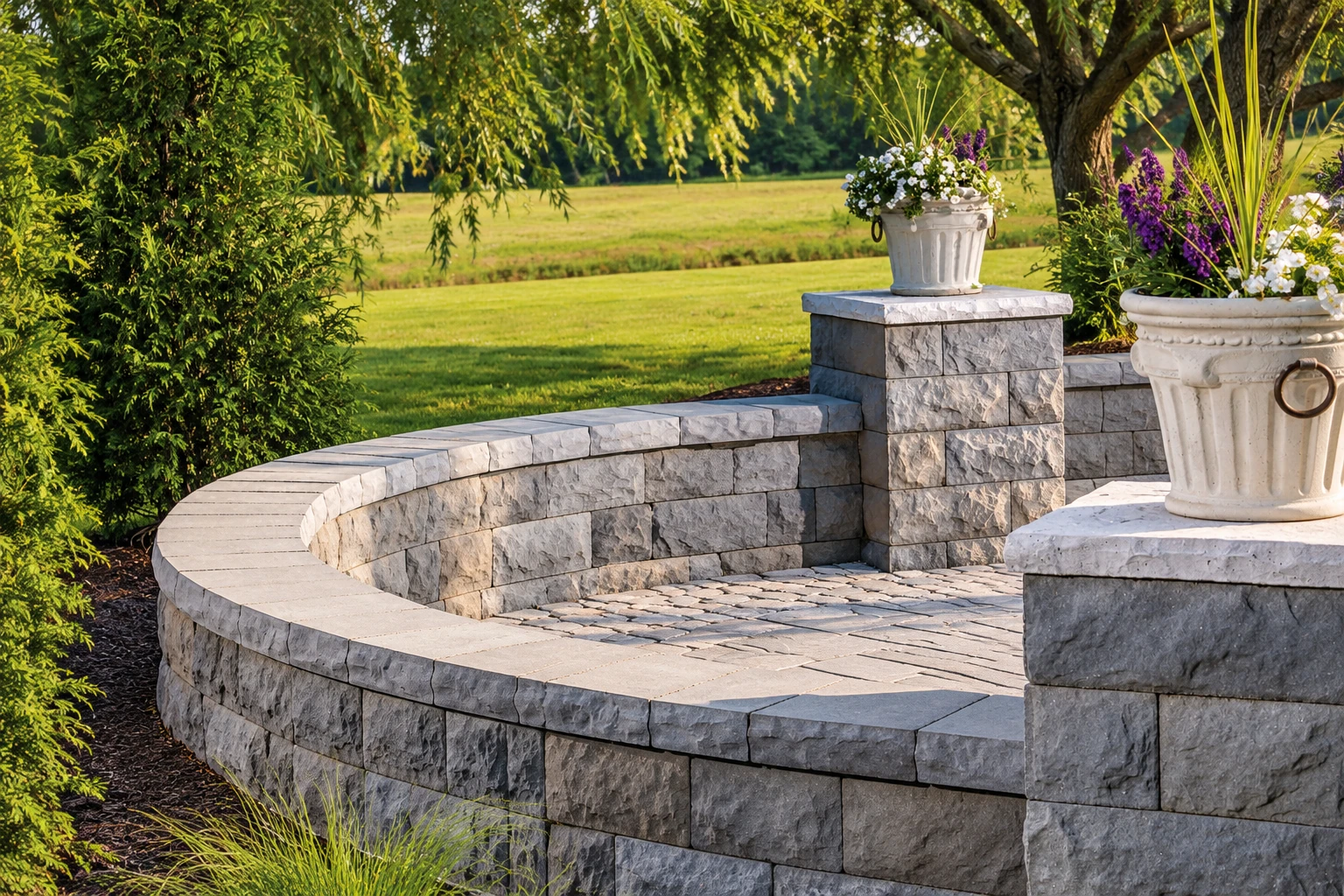
On sloped yards a retaining wall holds the soil back, and the drainage behind it matters as much as the wall, so water doesn't build up and push on it.
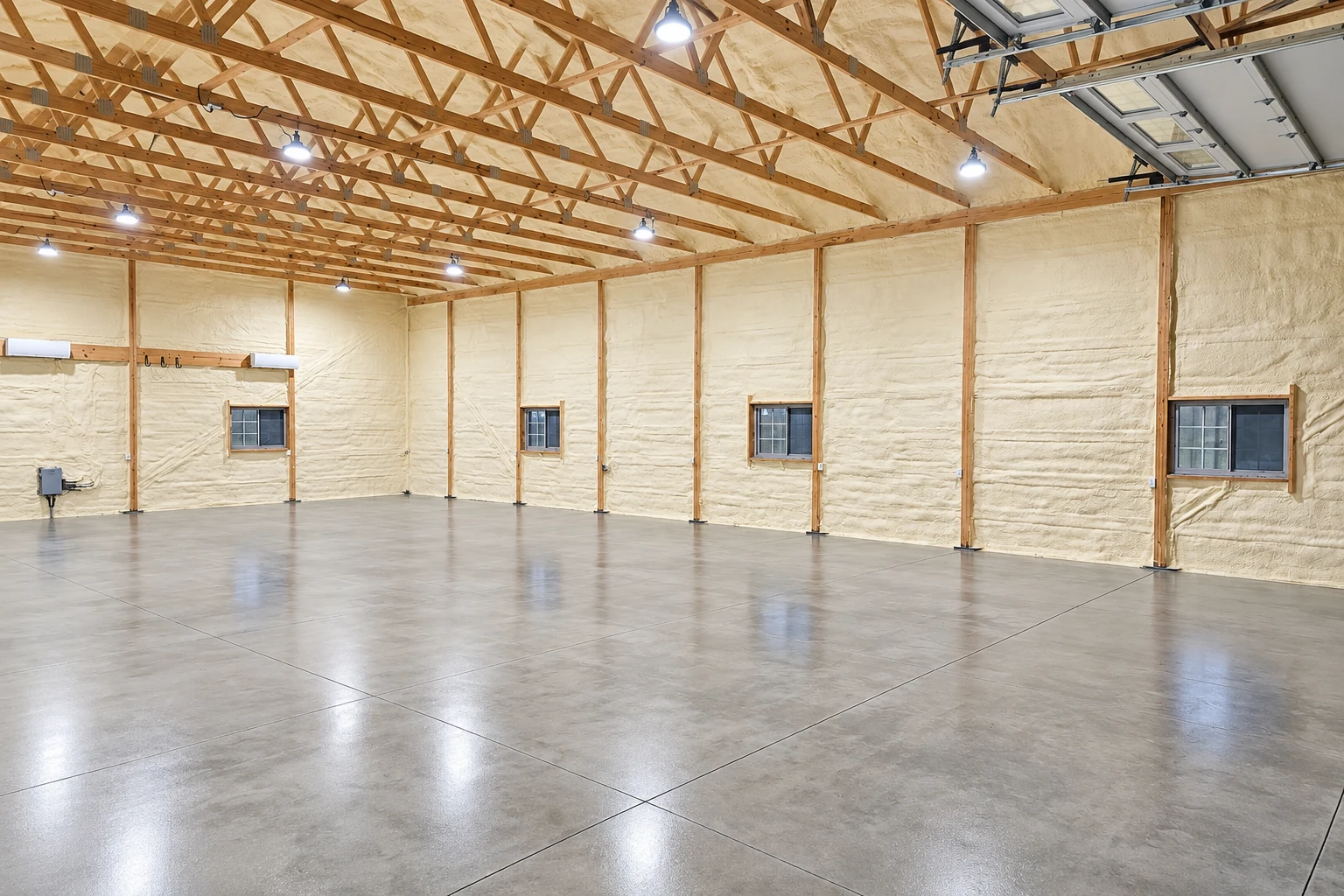
For a workshop, basement or room addition, we pour interior floors flat and finished to suit what goes on top, whether that's a sealer or tile.
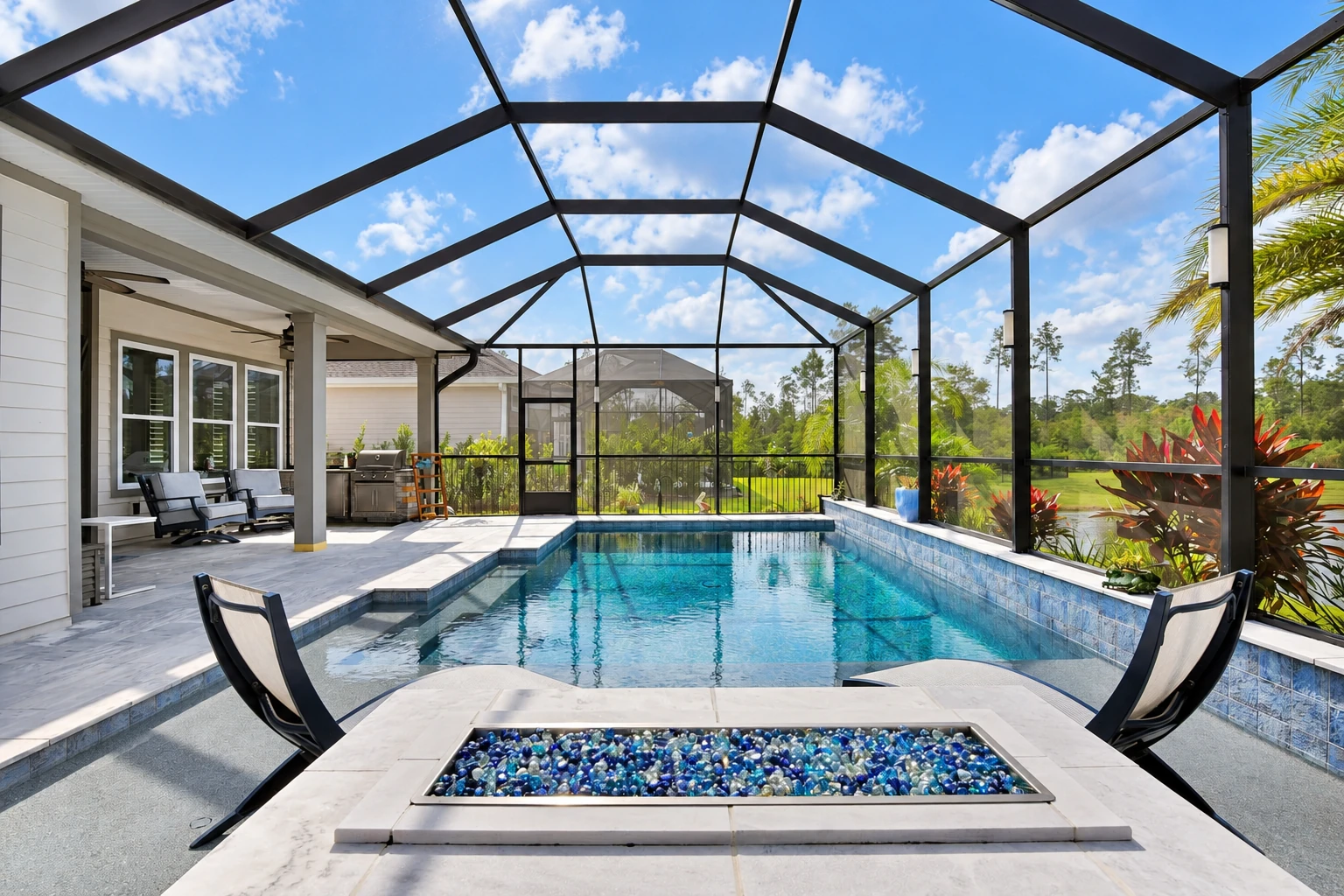
Around a pool the deck has to drain away from the water and feel good underfoot, so we slope it with care and give it a texture with some grip.
Front steps that have cracked or pulled away from the porch usually point to a weak footing, so we rebuild them on solid ground with every step the same height.
For a new garage, studio or addition on a slab, we prepare the ground, set the steel and pour the foundation the plans call for.
When an addition or rebuild needs a full foundation, we dig, form and pour it to the approved plans, with time left in the schedule for inspections.
For a shared lot or a wide parking pad at a home or small building, we plan the thickness and drainage around the weight and traffic it'll carry.
Decks, fences and posts sit on footings that carry their weight into the ground, and on soft soil we check what's under them before deciding how deep to go.
If floors have started to tilt or doors stick because the house has settled, we look at how far it's moved and whether raising it makes sense.
We saw-cut openings, trenches for drain lines and clean edges where old concrete meets new, so a repair doesn't mean breaking out more than you need.
We reply to calls and messages within one business day, and the estimate is free, on site and comes with no obligation. I'll set a time to come out to your Corte Madera property, walk the job with you and measure, then give you a written estimate that spells out what's included.
(415) 429-4397Building permits here go through the Town of Corte Madera's Building Division, which reviews applications against state and local codes and inspects the construction. We wait for any permit to be in hand before we start, so the city's review usually sets your start date more than our calendar does. Before you hire anyone, ask to see a contractor's state license and whether they hold a Corte Madera business license.
When I come out, I find out what the city asks for on your job and help you with the paperwork. The price moves with the size of the area, whether old concrete has to come out, how much base the ground needs, the steel inside the slab, the finish you pick and how easily a truck can reach the spot. Your written estimate lists each of those for your job.
We're based in Tiburon and do the same work over in Mill Valley and in cities across Marin. Wherever the job is, the schedule turns on the same things, which are the permit, our crew's calendar and the days the new concrete needs before it can take weight.
I started this business in Tiburon in 2020, and I still come out to look at each job and write the estimate myself. I'm on site with our crew while the work gets done, so the person who told you the slab would fall away from your house is the one checking that slope before the pour.
We're fully licensed and insured, and our work is backed by our satisfaction guarantee. What we're known for is explaining each step and the reason for it before anything gets poured. I'd rather answer a question twice now than have you wondering about it later, so call (415) 429-4397 or send us a note through our form and tell me what's going on.
Corte Madera runs from low ground near the bay up into hillside streets, and a few local conditions change how we plan the base, where the water goes and what gets checked before we pour.
Mariner Cove and Marina Village sit on filled baylands and have settled as much as four feet since they were built, depending on how thick the bay mud is underneath. A slab on ground like that moves with the soil, so we dig out, look at what's really there and build the base for it, and we'll tell you plainly what concrete can and can't do on settling ground.
In some of those places, settling has left storm drain pipes that no longer flow the way they were designed to, and floors that tilt. So we don't assume your water will find the street drain. Before we set the slope on a driveway or patio, we check where the water actually runs and pitch the slab away from the house toward a spot that can take it.
The city has adopted a wildland-urban interface boundary, the line it uses to apply wildfire hazard codes, and the area inside it counts as a Very High Fire Hazard Severity Zone under state law. If your lot falls inside it, those codes come into play on building work, so it's one of the first things we look up when we check what the city asks for on your job.
The base is the part nobody sees once we pour, which is why it's the first thing people want to cut from a budget. I'd trim the finish before I'd trim the subgrade, the packed ground the slab sits on, because a plain slab on a good base holds up and a stamped one on loose dirt tends to crack and sink. On soft ground near the bay, that matters even more.
The price comes down to the driveway's size, whether the old slab has to be broken out, how much base the ground needs and the finish you pick. On soft ground near the bay, base work is usually the biggest variable. A plain broom finish, a light swept texture for grip, costs less than stamped or colored concrete, and your written estimate lists each part.
You can usually walk on new concrete well before you can drive on it, and we give you both days before we pour. That wait is curing, the time the concrete needs to gain strength, and parking on it early is a common cause of cracks. Plan to park on the street for a while and keep foot traffic off until we say so.
Concrete can still crack, but we do the work that keeps cracks small and in places we choose. We cut control joints, shallow grooves that give the slab a planned place to crack, soon after the pour, and we set rebar, steel bars that hold the pieces together. Old patios usually crack because the base was raked level instead of dug out and packed.
If your property is in the flood zone, zones AE and VE on FEMA's map, the city requires a Floodplain Development Permit for new development and for any addition or renovation to an existing structure. The Public Works Department can help you check whether your property is in it. If it is, I'll find out what the city asks for before we schedule anything.
Yes, a contractor needs a license from the Contractors State License Board when a project needs a building permit, uses any additional workers, or totals $1,000 or more in labor and materials, and they need it before they bid. Nearly any driveway or patio clears that amount, so ask any contractor you're considering for their state license first.
Clear the area of furniture, pots and anything you want to keep, plan where you'll park, and mark any sprinkler lines you know about. If the job needs a permit, the city asks for the property owner's approval when it's submitted, so we'll go over that with you. Tell me how you plan to use the space, because that shapes the slab.
We're reachable until 10 PM on weekdays and 11 PM on weekends, so call (415) 429-4397 or fill out our contact form whenever it suits your day.